MALACASA White Porcelain Dinnerware Review — Why Plain Beats Patterned
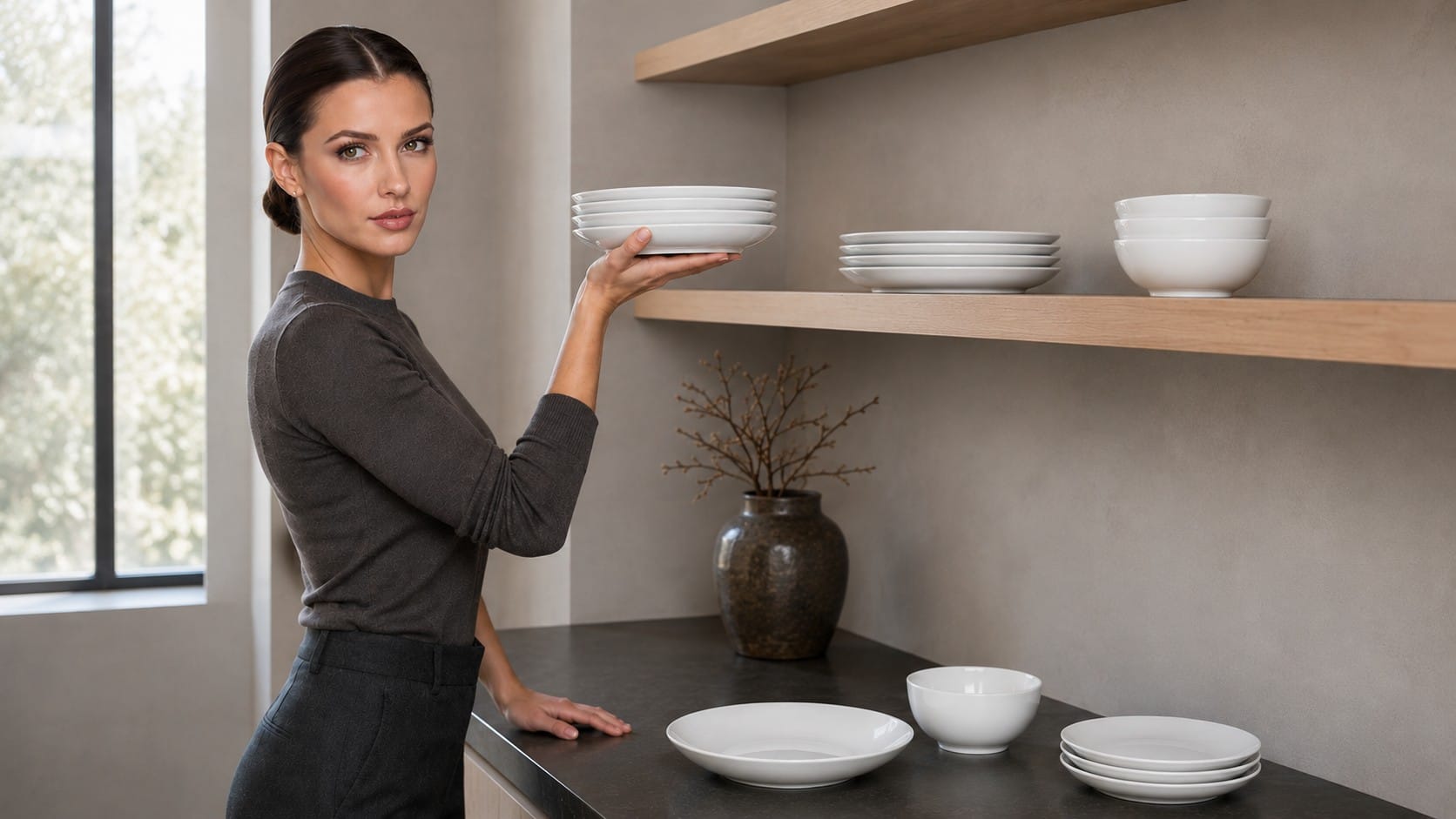
Plain white porcelain is the most useful thing you can own and the least interesting thing to shop for. That is not a criticism. It is the entire argument for buying it.
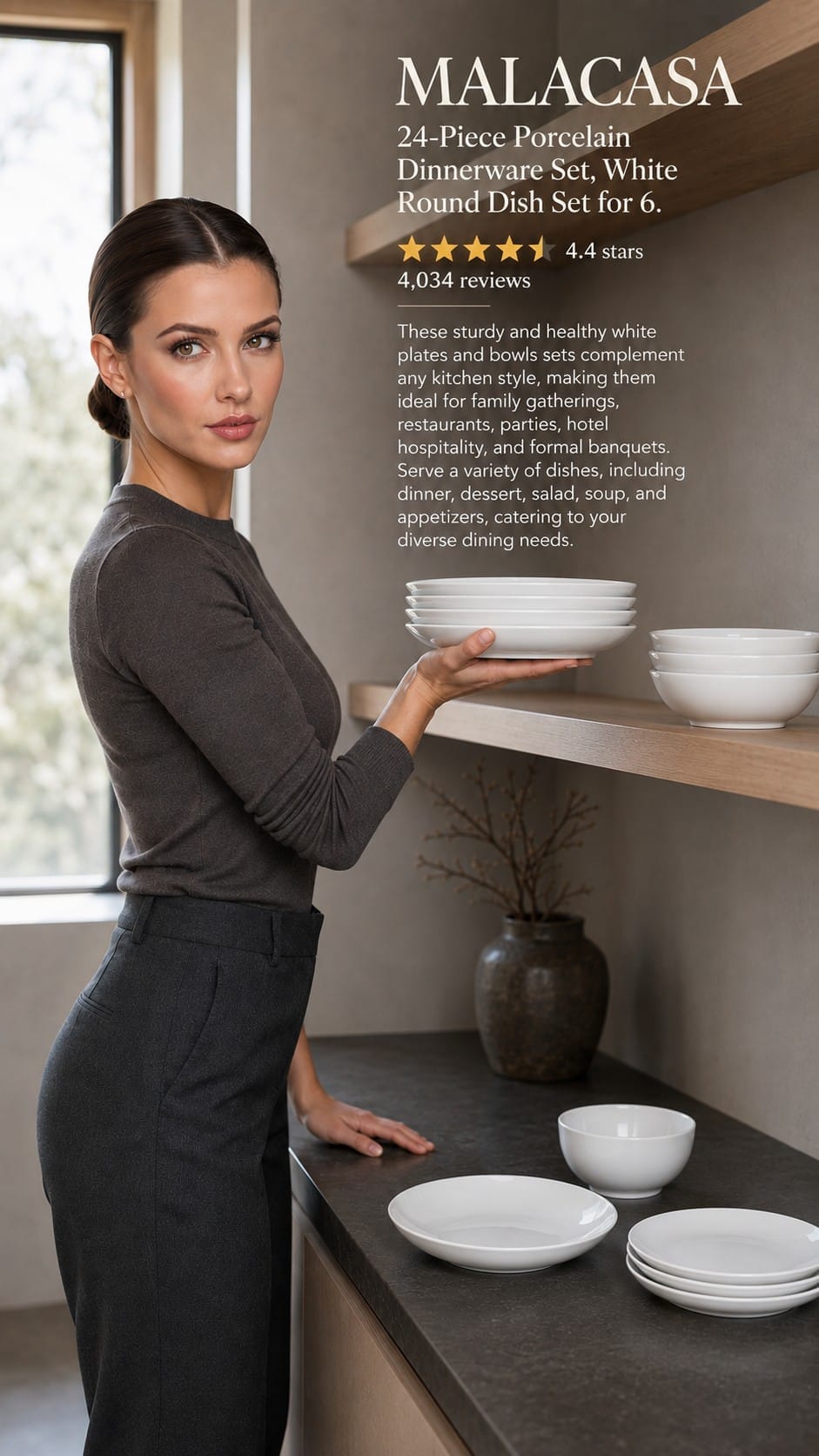
✨ Key Features
- Plain white porcelain — no pattern, no rim, nothing to date
- 24 pieces, service for six — a full table without buying twice
- Round, simple shapes — reads as considered rather than styled
- Works everywhere — a Christmas table, a Tuesday, a dinner party in July
- 💰 $88.99 — roughly $3.70 a piece for real porcelain, service for six
- ⭐ 4.4 stars, 4,034 reviews — a lot of people have already tested this
✨ The quick verdict
Buy plain and buy once. There is nothing on these plates to fall out of style, which means the decision you make now does not need revisiting in five years. Everything seasonal happens in the layers above them.
Why plain beats patterned
A patterned plate makes a decision on your behalf every time you set the table. It has a colour scheme, it has a mood, and everything else you put down has to agree with it. That is fine until you want a different mood, and then you are working around your own dishes.
A plain plate makes no decision. It takes whatever the runner and the napkins and the greenery are doing and gets out of the way. That is what makes it the right base for a table that changes by season — the plates stay, the accents move, and you never own two dinner services.
There is also the simple fact that a plate spends most of dinner covered in food. The pattern you paid extra for is visible for about four minutes.
Why white, and why not stark white
A caution worth stating. True bright white plates on a true bright white cloth flatten into one surface, and under candlelight the whole thing goes faintly blue and cold. That is the most common way a neutral table goes wrong.
The fix is not different plates. It is the layer underneath — an oatmeal or greige cloth gives white plates something to sit against, and the contrast is what stops it reading as flat. Buy the white plates. Do not buy the white tablecloth.
The honest part
- ⚠️ Porcelain chips at the rim. It is harder than stoneware but it is not indestructible, and a chipped white plate is very visible. Stack with something soft between them if you are storing them long-term.
- ⚠️ White shows knife marks. Grey scratch lines from cutlery build up over years on any white glaze. They come out with a mild abrasive, but you will notice them before your guests do.
- ⚠️ 24 pieces means four per setting. Plate, side, bowl, and one more. Check the breakdown against how you actually eat — if you never use a side plate, you are paying for six of them.
- ⚠️ It is heavy. Porcelain has weight, which is part of why it feels good and part of why a full stack is not light to carry from the cupboard.
- ⚠️ Plain is boring to shop for. There is no moment of delight when this arrives. That is the trade for owning it in fifteen years.
None of that changes the recommendation. It is what I would want to know first.
Who it is for
This is for you if you would rather own one set of dishes than a seasonal one and an everyday one. It is also the right choice if you are not certain of your own taste yet — plain white is the option you cannot regret, because it agrees with whatever you decide later.
It is not for you if you want the plates themselves to be the interesting thing on the table. Some people do, and that is a legitimate way to set a table. It is just not this one.
The bottom line
Service for six, real porcelain, under ninety dollars, and nothing on it that can go out of style. Pair it with a warm neutral cloth rather than a white one and it will carry every table you set for the next fifteen years. ✨
Building the whole thing? Here is my full quiet luxury Christmas table → — every piece, top to bottom.






1 comment