5 Christmas Trees for Every Style — Shop Each Look
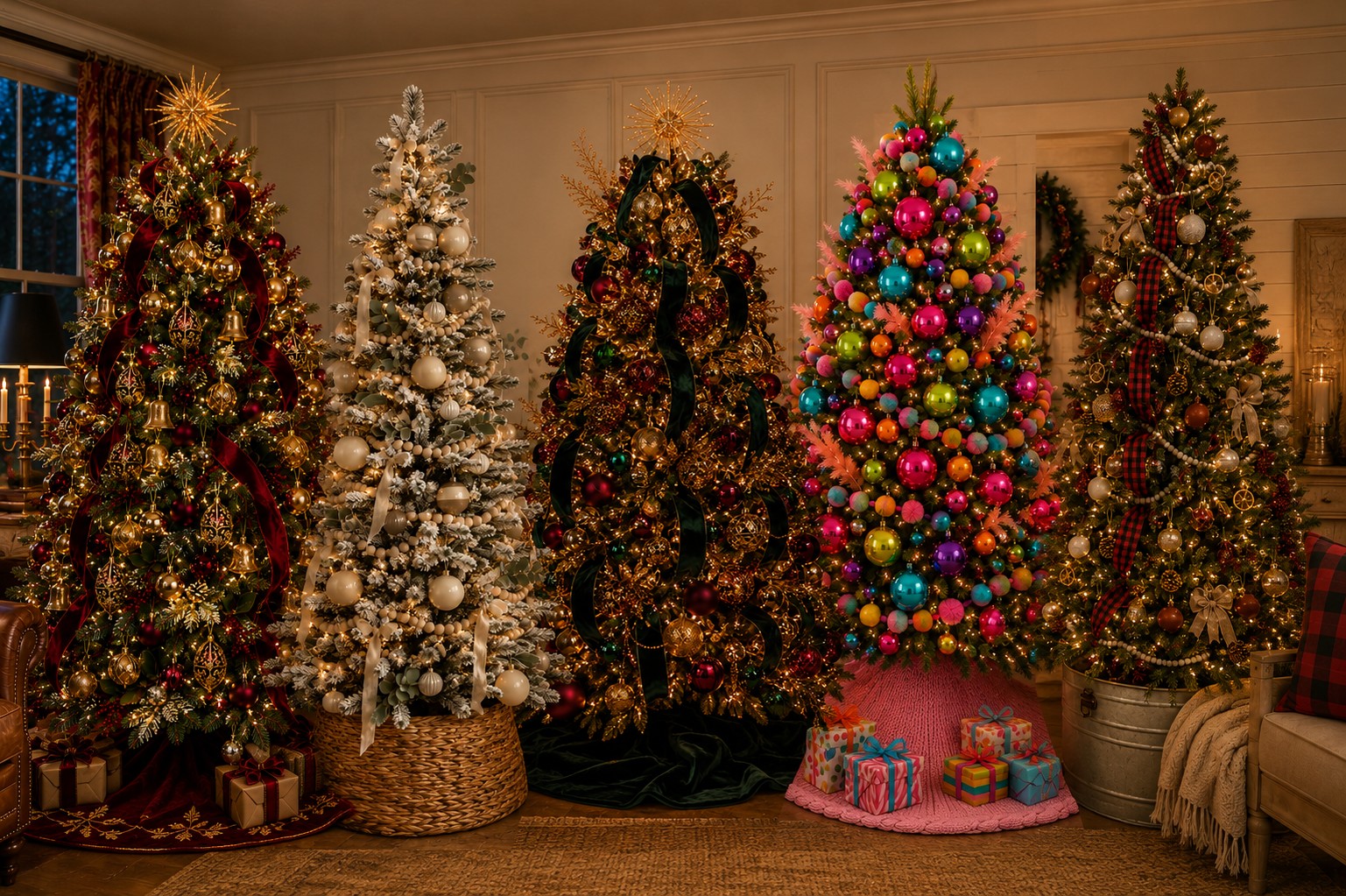
Five Christmas trees. Five completely different rooms. And here is the part that surprised us when we added it all up: four of them cost within seventy-three dollars of each other.
Two hundred and eighty-four dollars. Three hundred and one. Three hundred and fifteen. Three hundred and fifty-seven. Four complete trees — tree, lights, ornaments, ribbon, fillers and base — sitting in a band tight enough that price is not what separates them.
Then there is the fifth, at one thousand three hundred and fifty-nine, which exists to show you what the money actually changes.
What separates the first four is not budget. It is a handful of decisions about quantity and restraint that cost nothing at all.
Which one is yours?
Start with the room rather than the tree. Ask what you want it to feel like when someone walks in.
Warm and lived-in — plaid, pinecones, wood and cream. That is Wendy’s farmhouse tree.
Calm and quiet — flocked branches, cream and bone, deliberate empty space. Nikki’s neutral tree.
Full and glittering — champagne gold, a hundred and twenty ornaments, nothing held back. Stacey’s glam tree.
Joyful and loud — eight colours, felt garlands, pink pampas. Vicki’s colourful tree.
Formal and permanent — burgundy velvet, statement baubles, built to hand down. Lexi’s heritage tree.
Every tree is the same six decisions
Whatever style you land on, you are buying the same six things in the same order. Once you see that, tree shopping stops being overwhelming.
1. The tree. Green or flocked, lit or unlit, and the tip count — which tells you far more about how full it will look than the height does.
2. Lights. Roughly a hundred per foot. This is the layer everyone underbuys.
3. Ornaments. Ten to twenty per foot, adjusted up or down by style. Usually the most expensive line.
4. Ribbon or garland. The cheapest visual volume you can buy, by a wide margin.
5. Fillers and picks. Pinecones, botanicals, sprays. They fill the gaps ornaments cannot.
6. The base. A collar, a basket or a skirt, hiding the stand.
Get the quantities right in layers two and three and almost any style works. Get them wrong and it will not matter how good your taste is.
Cozy Farmhouse — $315
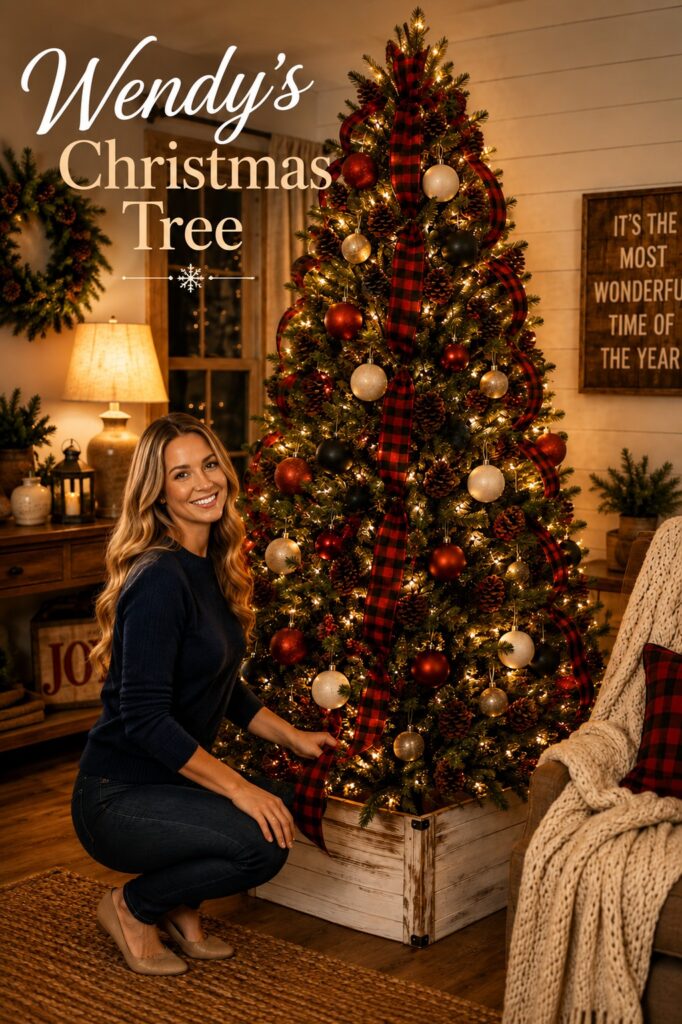
A sixty dollar green tree, six hundred warm incandescent lights, forty-eight rustic ornaments in cream and barn red, red and black buffalo plaid run vertically, natural pinecone picks, and a washed white wooden collar at the base.
Wendy’s is the build that makes the quantity argument most plainly: the tree is the cheapest part, and the lights cost exactly as much as the tree does.
See Wendy’s full farmhouse build →
Neutral and Quiet — $301
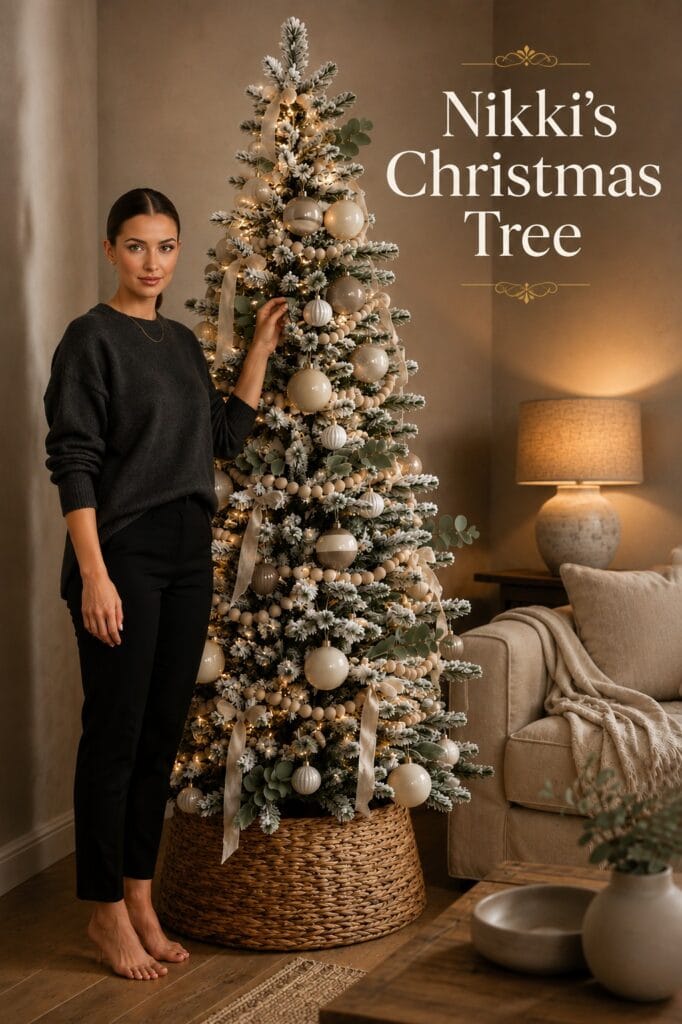
A flocked tree with sixty-four real pinecones already on it, five hundred lights on white wire, forty-eight textured ornaments in cream and taupe, linen ribbon, dried eucalyptus and a woven hyacinth collar.
Nikki’s is the only build here that deliberately buys less than the standard advice — fewer lights and half the usual ornaments — because the flocked branches showing through the gaps are the whole point.
See Nikki’s full neutral build →
Glam and Gold — $357
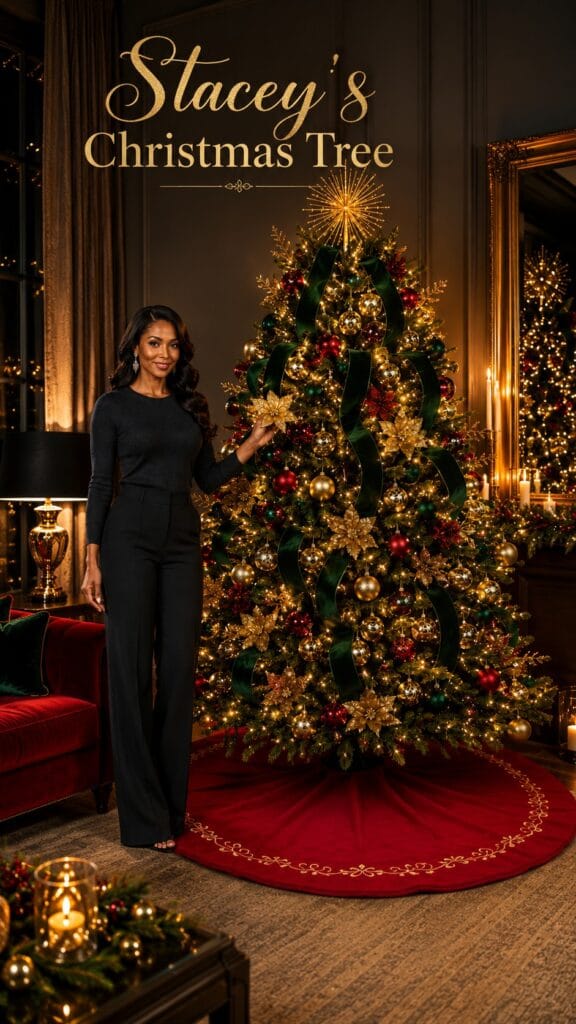
A champagne gold tree with 1036 tips, six hundred lights, a hundred and twenty ornaments, velvet ribbon, champagne glitter florals and seventy-two inches of red velvet pooling on the floor.
Stacey’s is the exact opposite of Nikki’s, and the contrast is instructive. Same principle — match the quantity to the style — pushed the other way as far as it goes.
See Stacey’s full glam build →
Colourful and Bold — $284
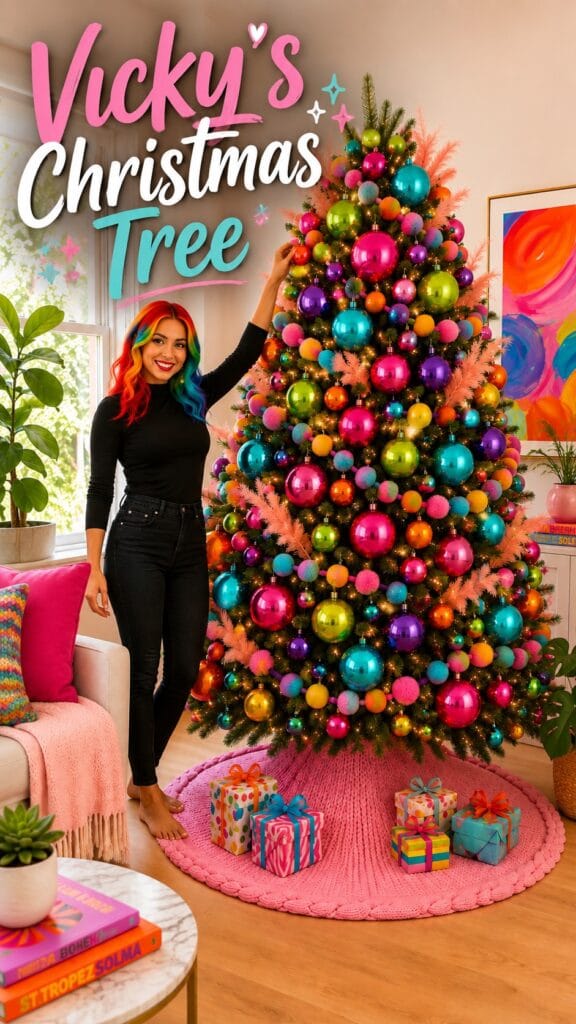
A plain green tree, six hundred warm white lights, a hundred and twenty-eight neon ornaments, rainbow felt ball garland, pink pampas and a pink knit skirt.
The cheapest complete build here, and the one with the strictest rules: every colour has to repeat at least six times, and the lights must be warm white or they change the colour of everything you chose.
See Vicki’s full colourful build →
Heritage and Formal — $1,359
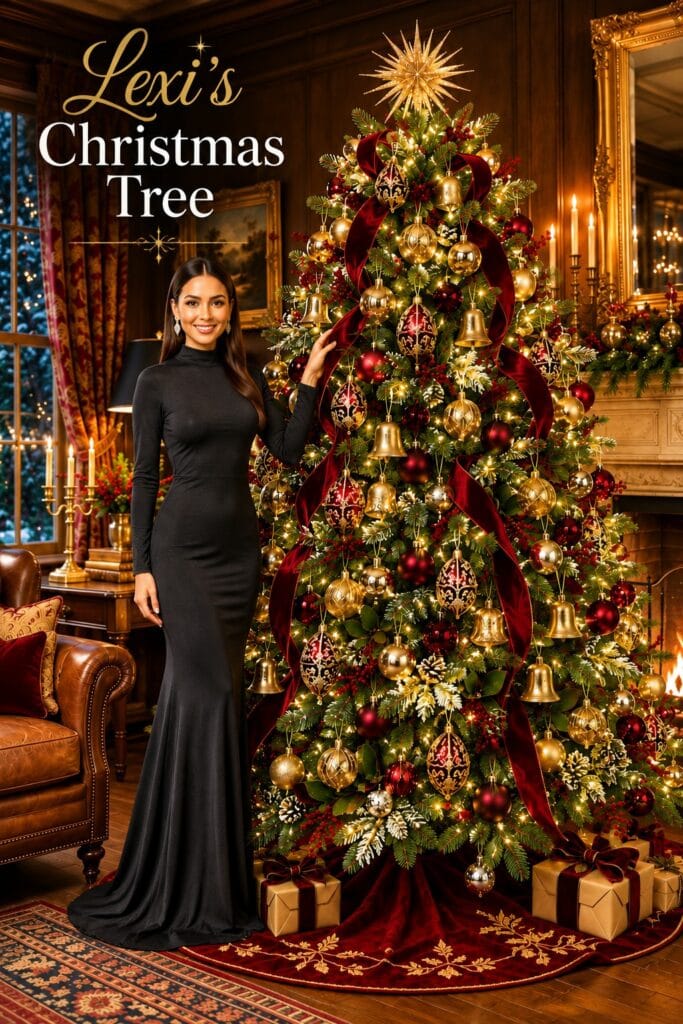
A 7.5ft pre-lit Balsam Hill Fraser Fir, twelve statement baubles at sixteen fifty each, four-inch burgundy velvet ribbon, snow-dusted cone and berry sprays, and a fifty inch velvet skirt.
Nearly ninety percent of that total is two decisions: the tree and the ornaments. Lexi is straightforward about it and lays out a three hundred and thirty dollar version of the same look in her post.
See Lexi’s full heritage build →
What $1,000 more actually buys
Worth comparing directly, because it is the question everyone has.
The Balsam Hill gets you needles moulded from real fir clippings, factory-wired lights running through the branches rather than around them, and a fifteen to twenty year lifespan against five or six.
It does not get you a better-looking tree from across a room. It gets you a better-looking tree from three feet away, and a tree you are still using in 2046.
If you keep things for decades, that is a real argument. If you like changing your look every few years, the sixty dollar tree is not a compromise — it is the correct choice, and the money is better spent on ornaments you love.
The mistake all five of us would warn you about
Buying one of everything.
One tree, one box of lights, one pack of ornaments, one roll of ribbon. It feels like a complete tree and costs around a hundred and thirty dollars, and the result is sparse in a way that is hard to diagnose afterwards.
The quantities that matter are lights and ornaments. A six foot tree wants about six hundred lights — six boxes of the usual hundred-count sets, or three of the two-hundred. And sixty to a hundred and twenty ornaments depending on style.
Both of those are the layers people buy one of. Both are the layers that show.
Where to start
If your budget is tight, buy the tree and all the lights, and stop there. A well-lit tree with a dozen ornaments looks intentional. A dim tree with a hundred ornaments looks like something went wrong.
Then add ribbon, which is ten to sixty dollars and covers more visual space per dollar than anything else on any of these lists.
Ornaments last for decades. Build that collection over years rather than in one December.
Five looks, one method
These are not five different ways of shopping. They are the same six layers, with the quantities and the palette turned in different directions.
Pick the room you want to walk into, then follow that host’s build.
Trends that spark your style.

Post Comment