Quiet Luxury Christmas Table: Tonal, Neutral Setting Ideas to Shop the Look
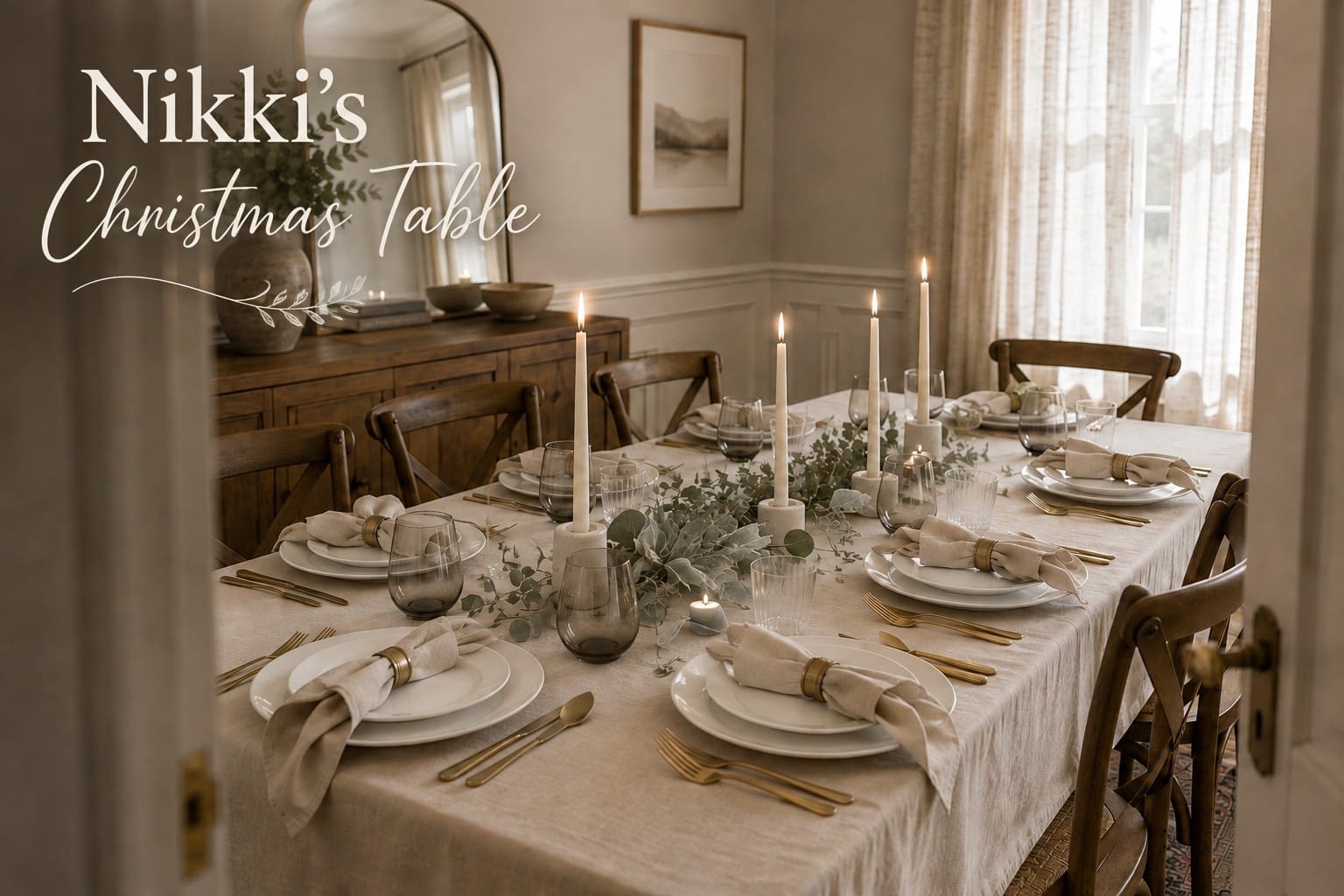
There is no red on this table and no green either. That is the whole idea. A quiet Christmas table is built from white, cream, and greige, with texture doing the work that colour usually does — and what makes it read expensive is not what is on it, but what somebody had the discipline to leave off.
There is a practical argument too, and it is the reason I set my table this way. Buy a cohesive neutral base once. Swap the accents by season. The base never dates, it works in December and in June, and you stop owning two of everything.
The base ✨
Four pieces. Buy these well and the rest is decoration.
White porcelain dinnerware
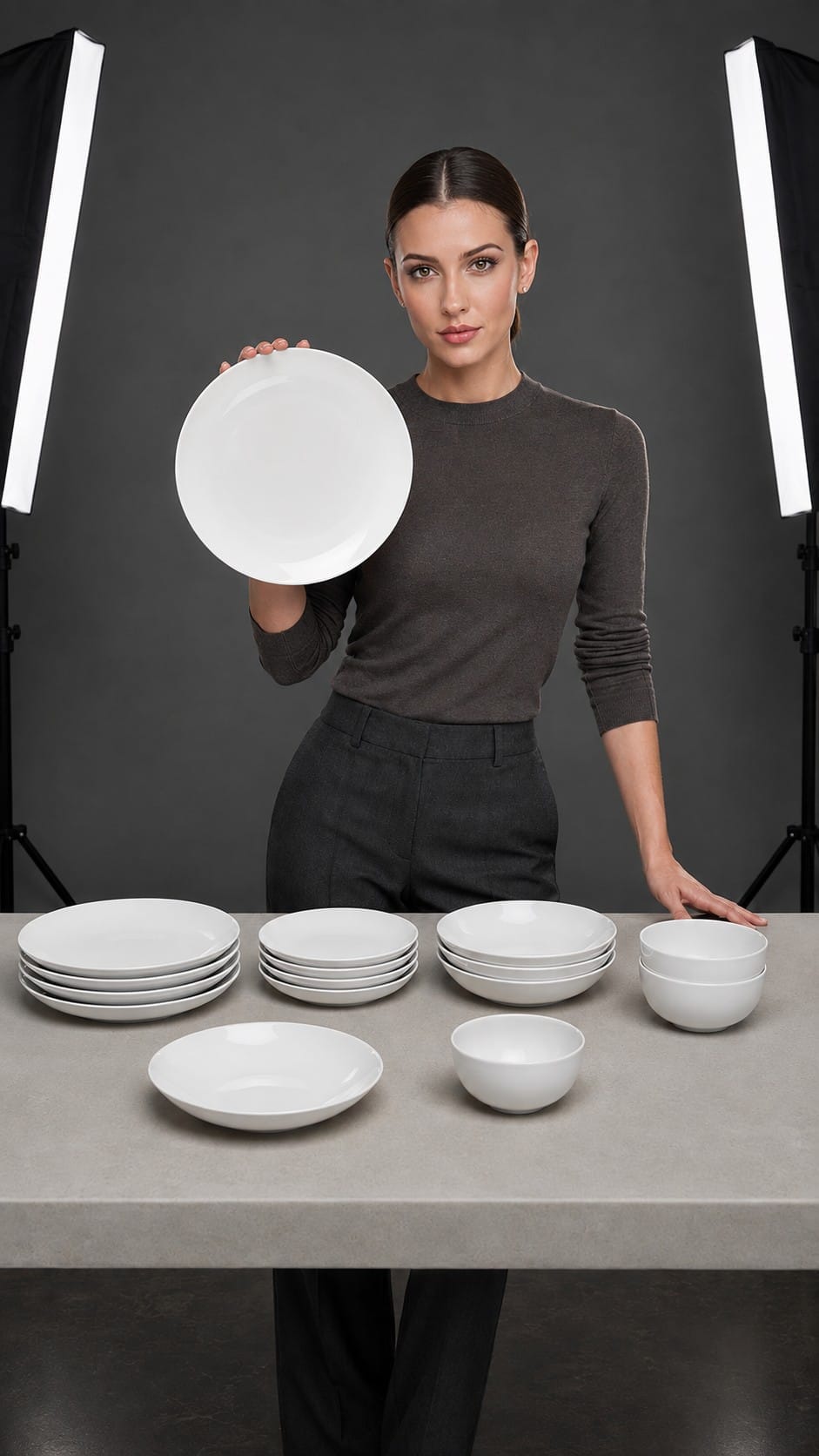
Plain white porcelain is the most useful thing you can own and the least interesting thing to shop for. Twenty-four pieces, service for six, no pattern and no rim. It disappears under the food, which is what a plate is supposed to do, and it will still be correct in fifteen years because there is nothing on it to go out of style.
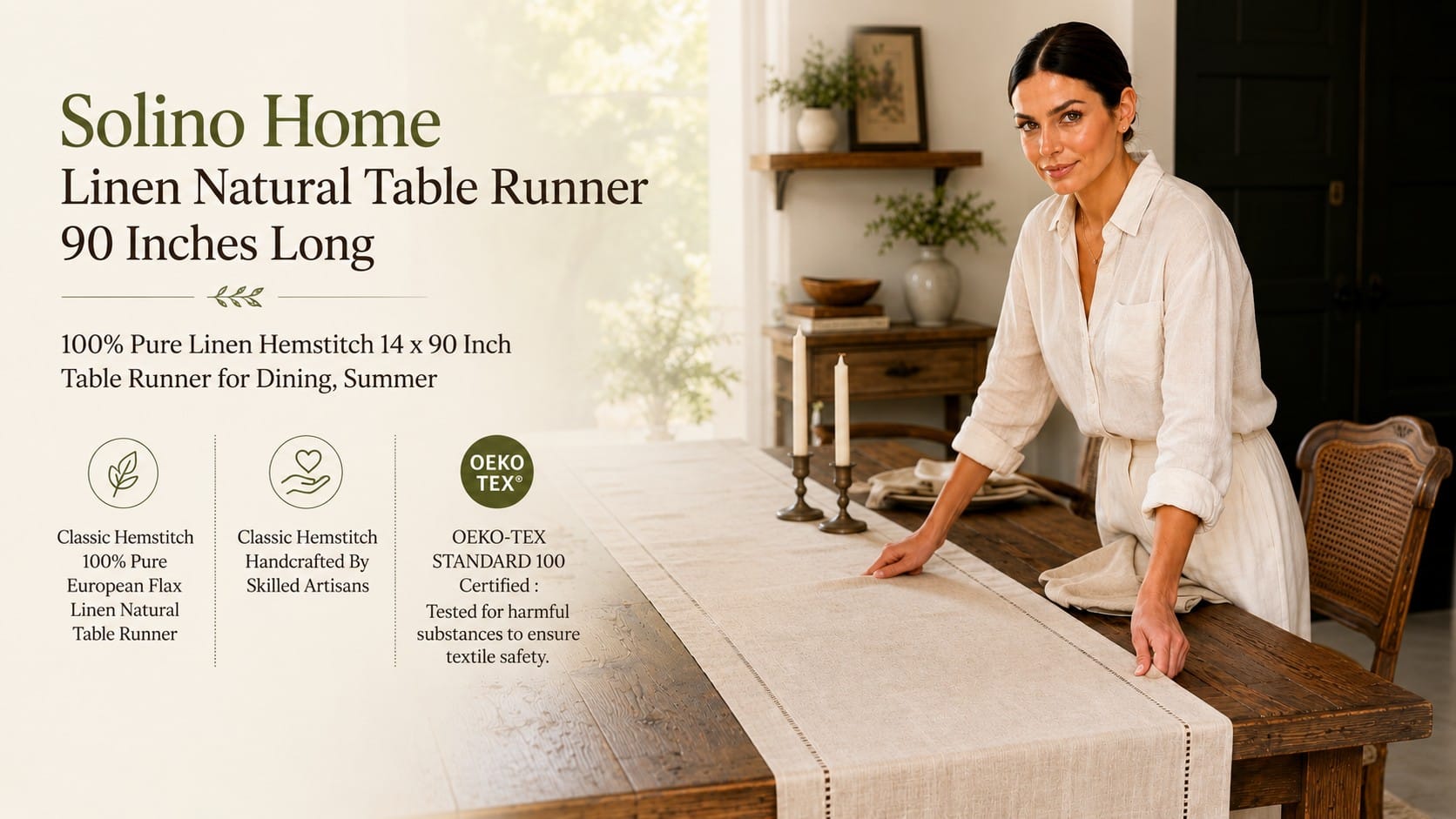
Washed linen tablecloth
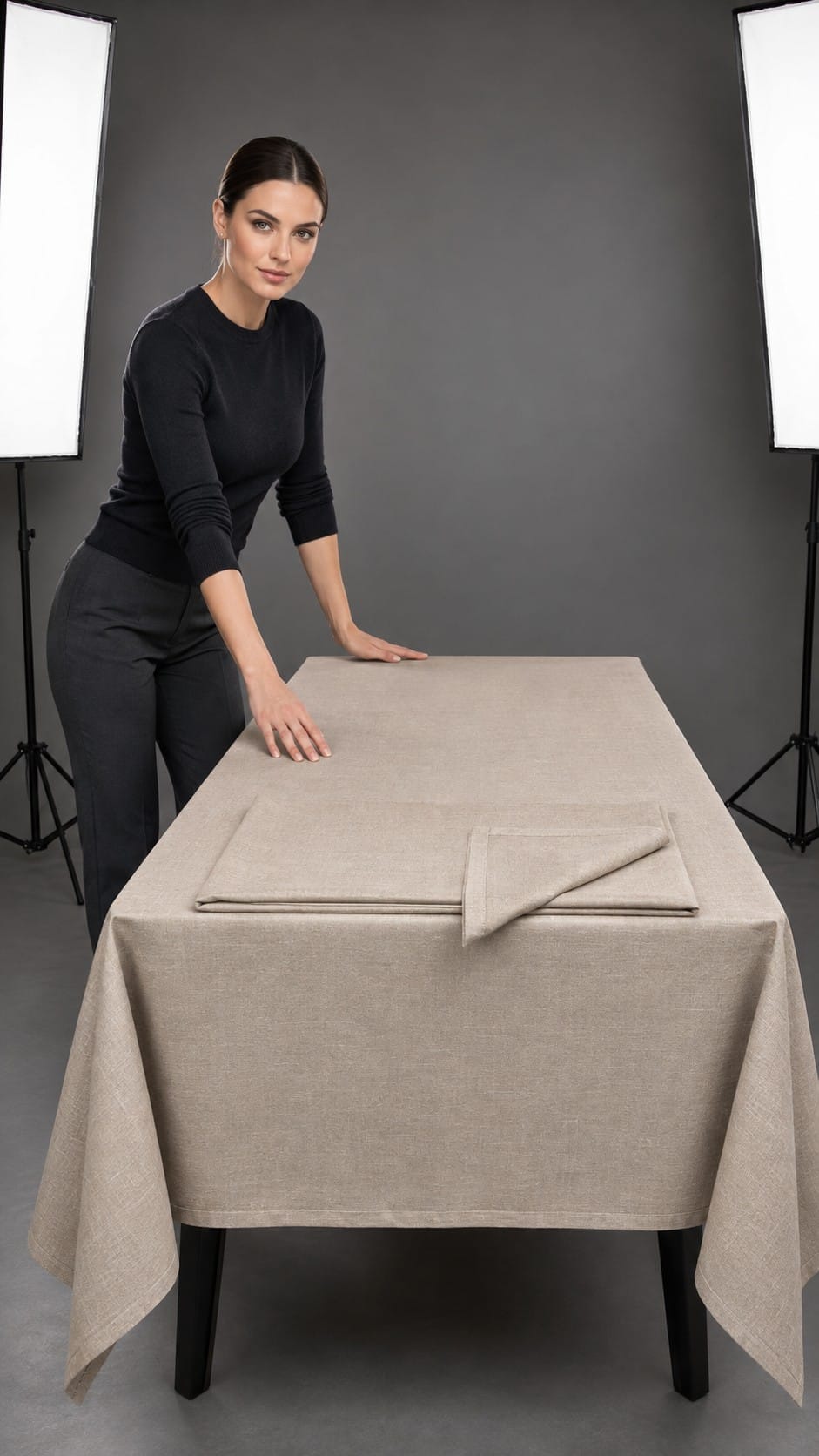
Oatmeal, not white. A true white cloth under white plates flattens everything into one surface; a warm neutral gives the plates something to sit against. The texture matters as much as the colour — a visible irregular weave is what keeps a neutral table from reading as blank.
To be clear about what this is: it is a faux linen, a linen-look weave rather than the real thing. You get the texture and the drape at a fraction of the price, and you do not get the thirty-year softening that true linen gives you. For twenty dollars for two cloths, I think that is a sensible trade — and if you decide the tonal look is yours, real linen is the upgrade later. Iron it once, badly, and then stop thinking about it.
Brushed flatware
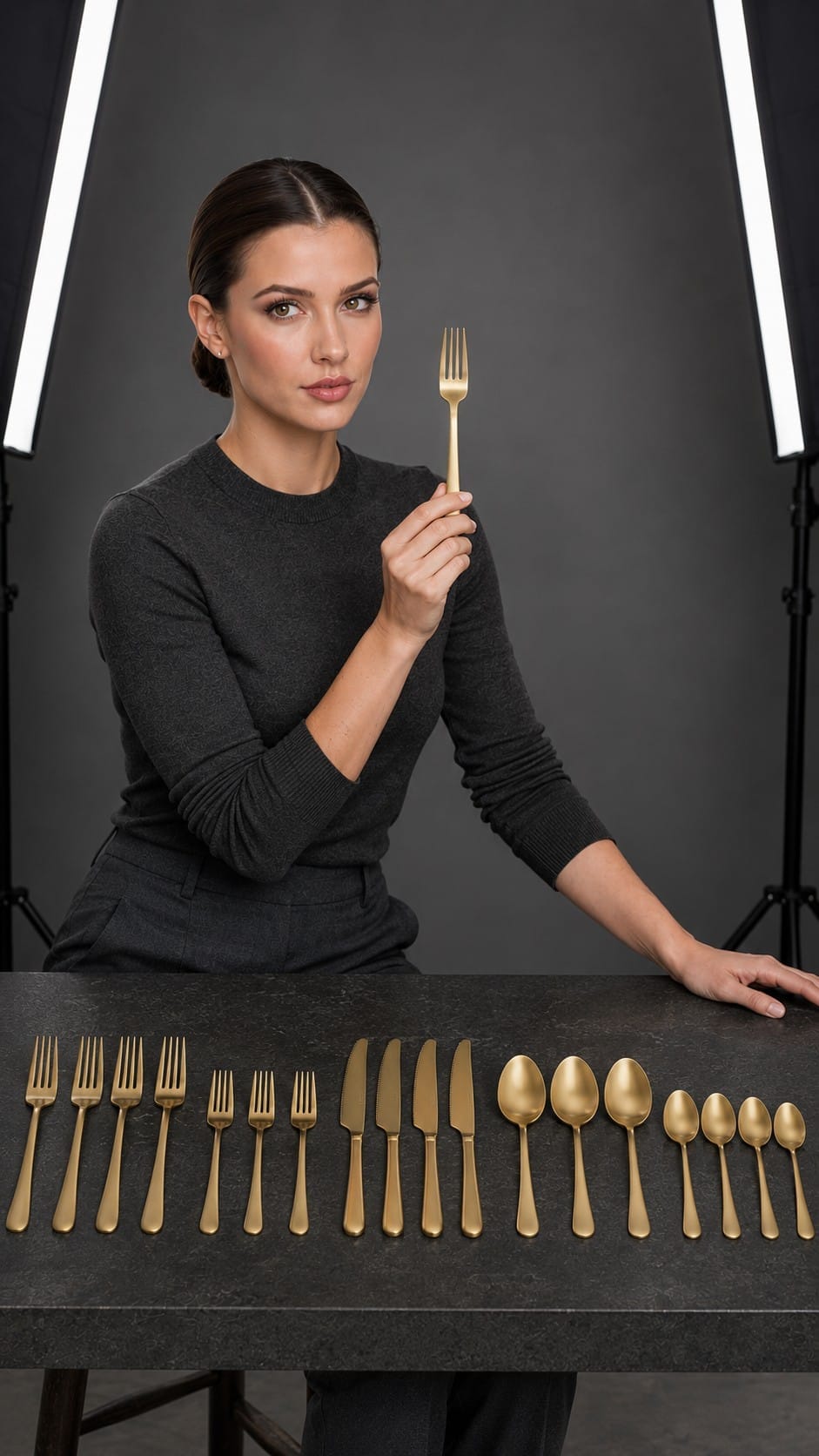
Matte or satin, never mirror-polish. High shine is the single fastest way to make an otherwise restrained table look like a banquet hall. Brushed metal catches light softly and photographs without throwing a glare across every plate. Service for six, and this is the one place a warm metal earns its keep against all that neutral.
Tonal linen napkins
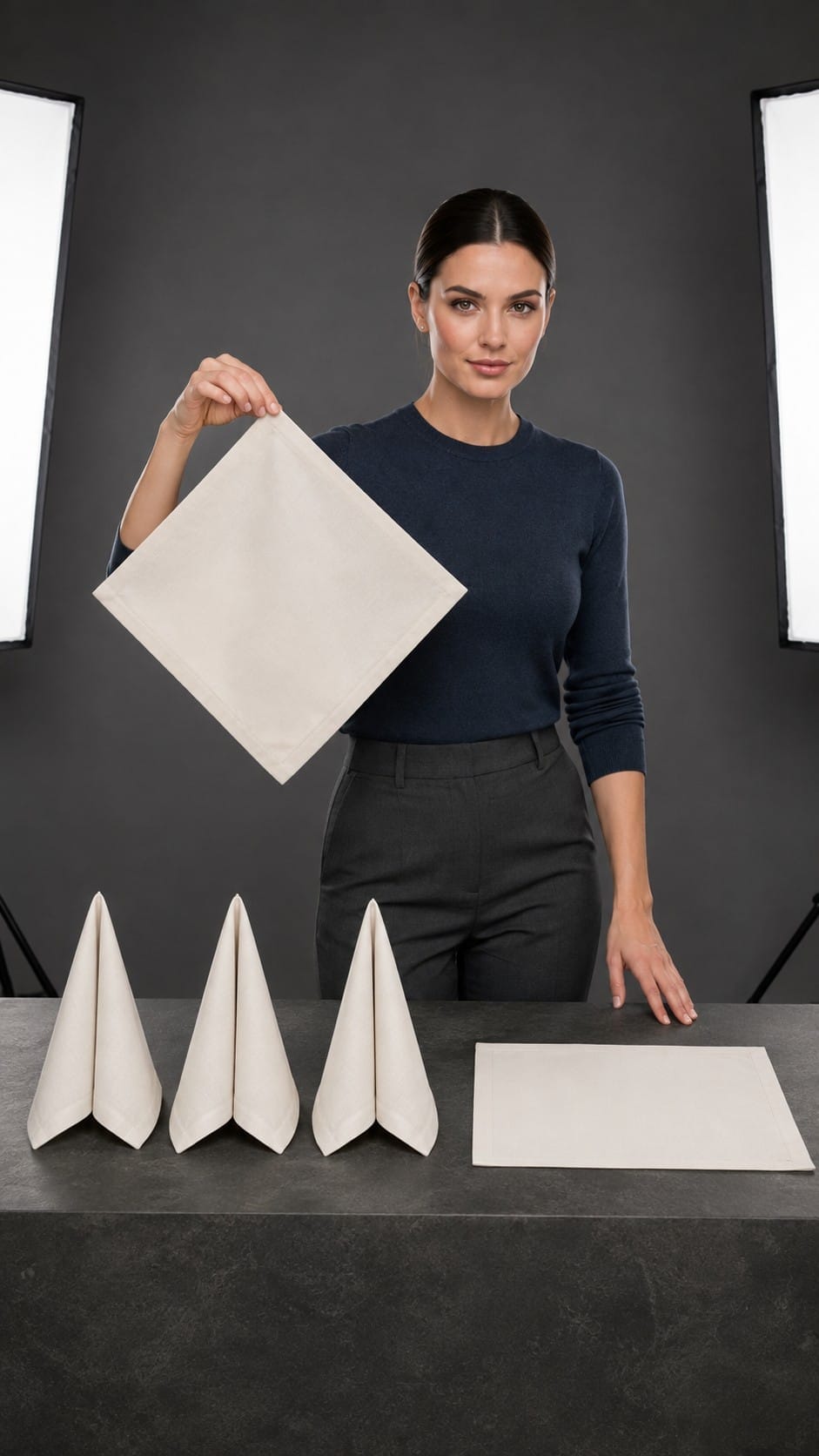
Greige or taupe, a shade off the tablecloth rather than matching it. Matching exactly reads like a set bought in one go. A half-step of difference reads like it was chosen. Fold them simply and lay them flat — elaborate folding belongs to a different kind of table.
What goes on top
Clean stemware

No gold rim, no cut pattern, no tint. Plain glass, which sounds like a non-choice and is in fact the choice. The best glassware is the kind you would also reach for on a Wednesday in February. Anything bought for one occasion lives in a cupboard eleven months a year.
Minimal napkin rings

A simple brushed semicircle, or nothing at all. I mean that — skipping the napkin ring entirely is a legitimate choice on this table, and restraint is the point of the whole exercise. If you do use them, keep them plain and let them repeat the flatware finish.
Lambs-ear and eucalyptus
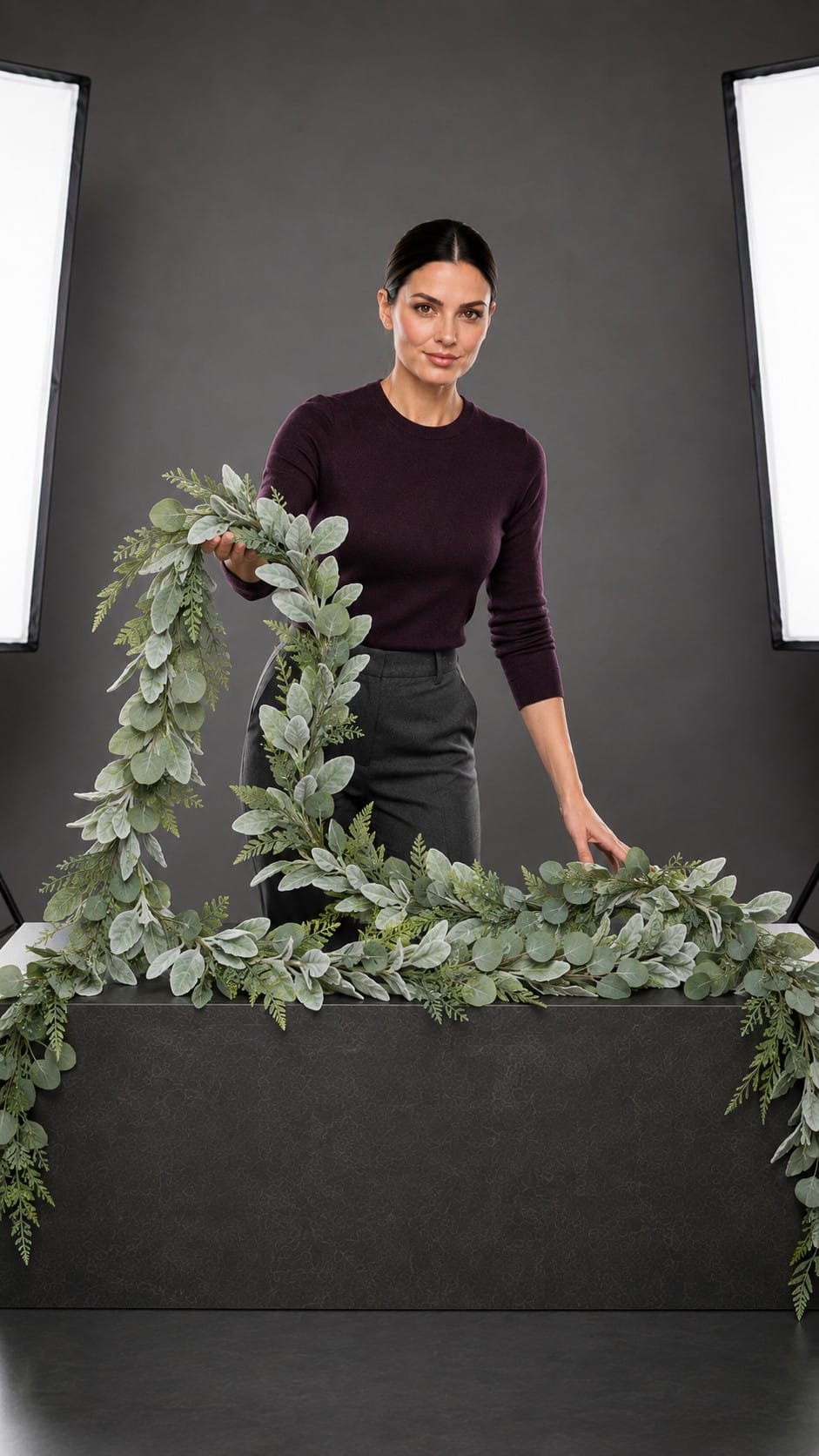
Soft silver-green, laid low down the centre. Not a full arrangement, not a mound — a thin line of greenery that reads as texture rather than decoration. Keep it under eye level so people can see each other, which is the only rule about centrepieces that actually matters.
Ceramic taper holders
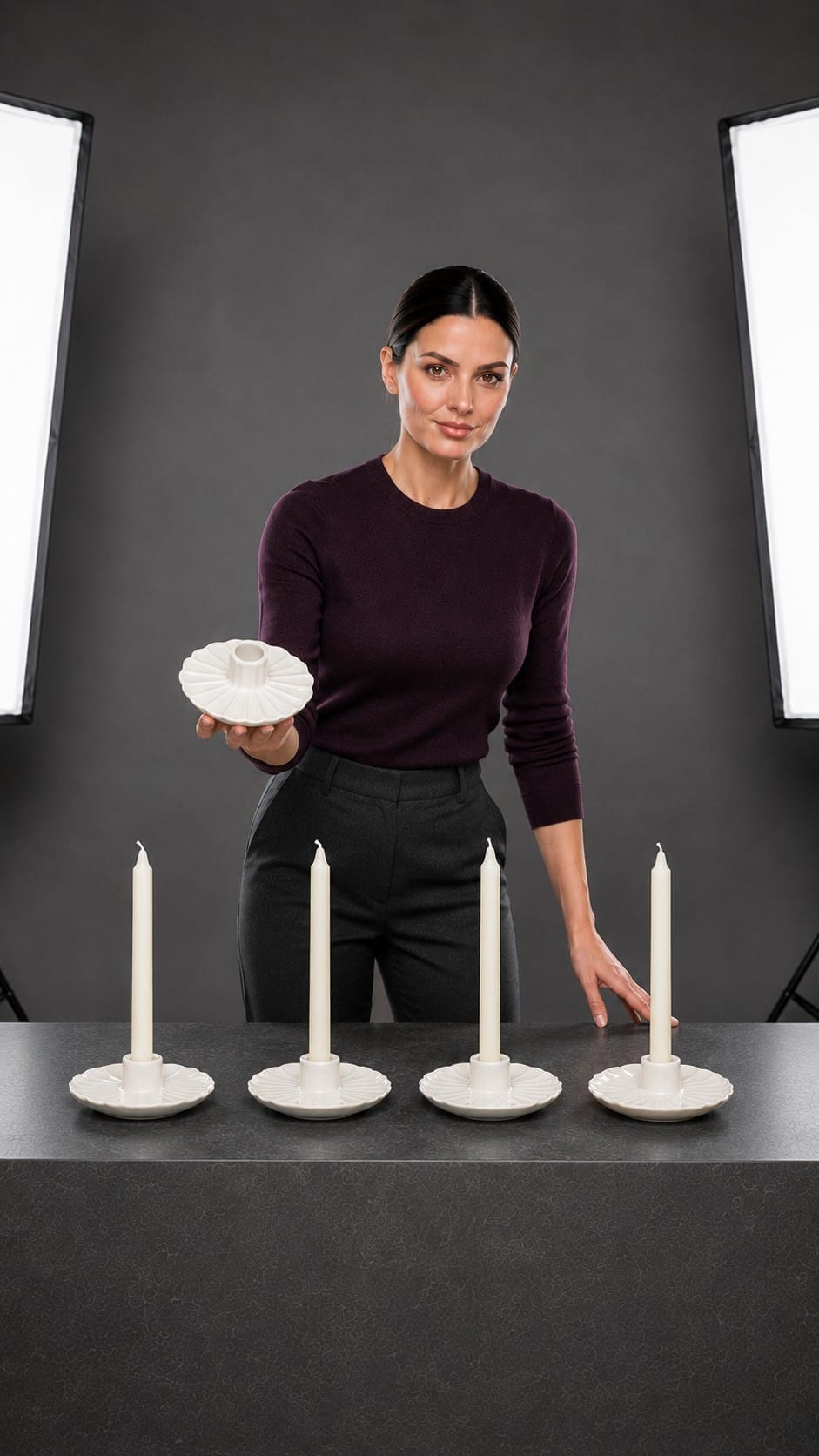
Matte ceramic rather than metal or glass. Under ten dollars, and the unglazed surface adds another texture to a table that is deliberately short on colour. Cluster them in odd numbers at different heights. Nine small candles change a room more than any single object on this page.
White dripless tapers
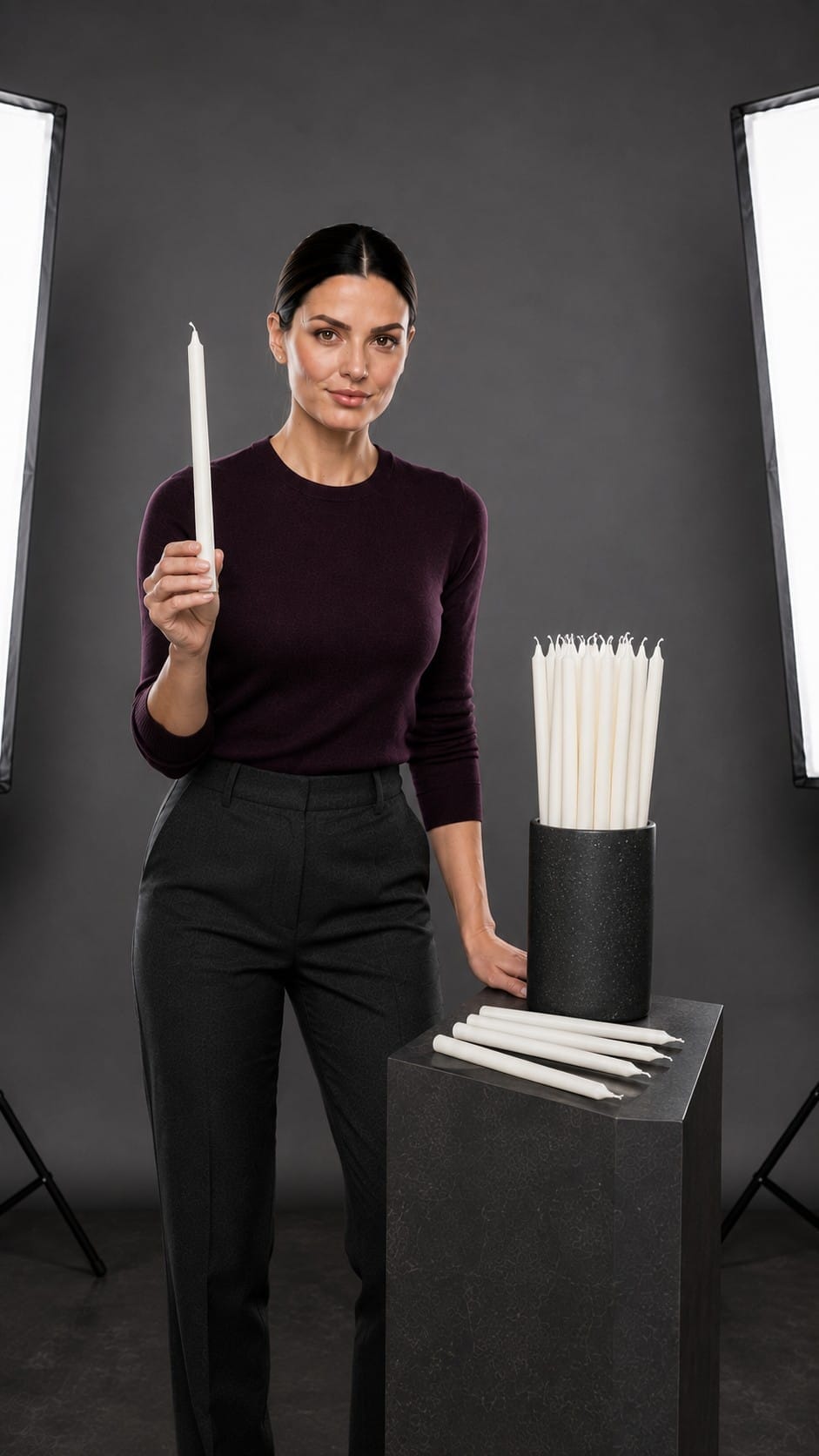
Dripless, unless you want wax on linen. Seven to eight hours of burn each, which covers several dinners from one box. Candlelight is the only warmth this table gets, so do not be sparing with it.
Matte ceramic bud vases
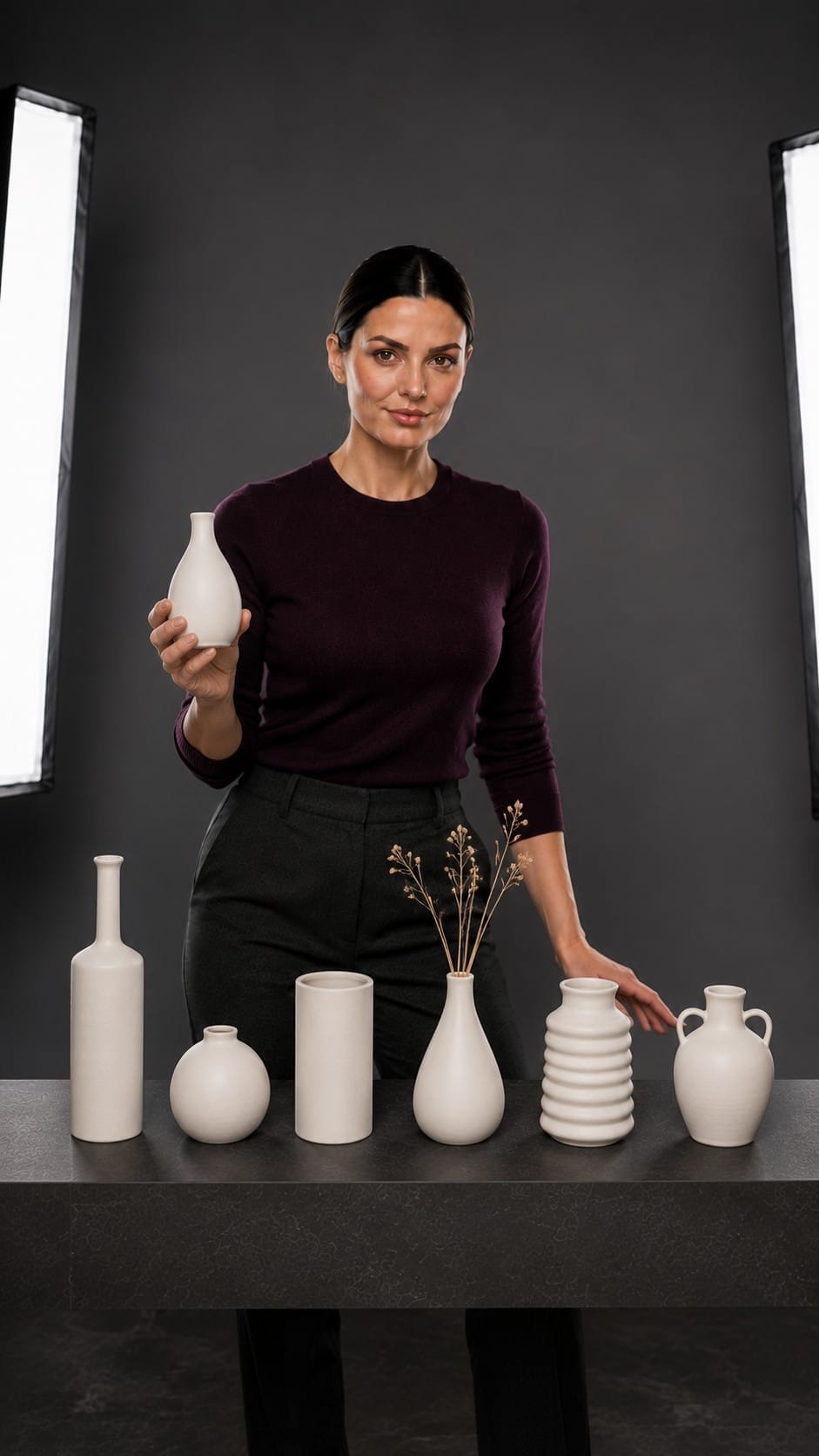
The seasonal accent, and the piece that makes the swap-by-season argument concrete. Sprigs of greenery in December. A single stem in spring. Empty in summer, which is also fine. The vases stay; what goes in them changes.
The honest part
- ⚠️ All-neutral goes flat without texture. This is the failure mode, and people usually blame the palette. It was not the palette. Linen, matte ceramic, brushed metal, unglazed stoneware — same colour, different surfaces. Skip that and you get a beige table rather than a quiet one.
- ⚠️ White linen shows everything. Wine, gravy, candle wax. That is the trade for the look. Treat spills quickly rather than at the end of the night and you will keep it for years.
- ⚠️ Some guests will not read this as Christmas. There is no red, no green, no tree imagery. If you are hosting people who expect a traditional table, this is a departure. I think that is the appeal. Go in knowing.
- ⚠️ Measure before you order the tablecloth. A cloth that stops short looks like a mistake in a way a runner never does. Check your table dimensions and allow for a proper drop on all four sides.
- ⚠️ A few pieces here have modest review counts. The napkin rings, the greenery, the candle holders and the bud vases are all in the low hundreds. Not a problem, but worth knowing you are not buying something ten thousand people have already tested.
- ⚠️ All ten pieces together run about $300. The base is roughly half of that. Buy the base, use what you own for the rest, and add a layer next year.
None of it changes the recommendation. It is just what I would want to know first.
Shop the whole table
Shop Nikki’s Christmas Table →
Not your style? There are five of us, and we each set a completely different Christmas table — cozy farmhouse, full glam, heirloom heritage, or bright and colourful. See all five and find yours →
Buy the base once. Change the accents. That is the whole method. ✨



5 comments