The Frye Melissa Tote: Heritage Leather That Doesn’t Need a Logo
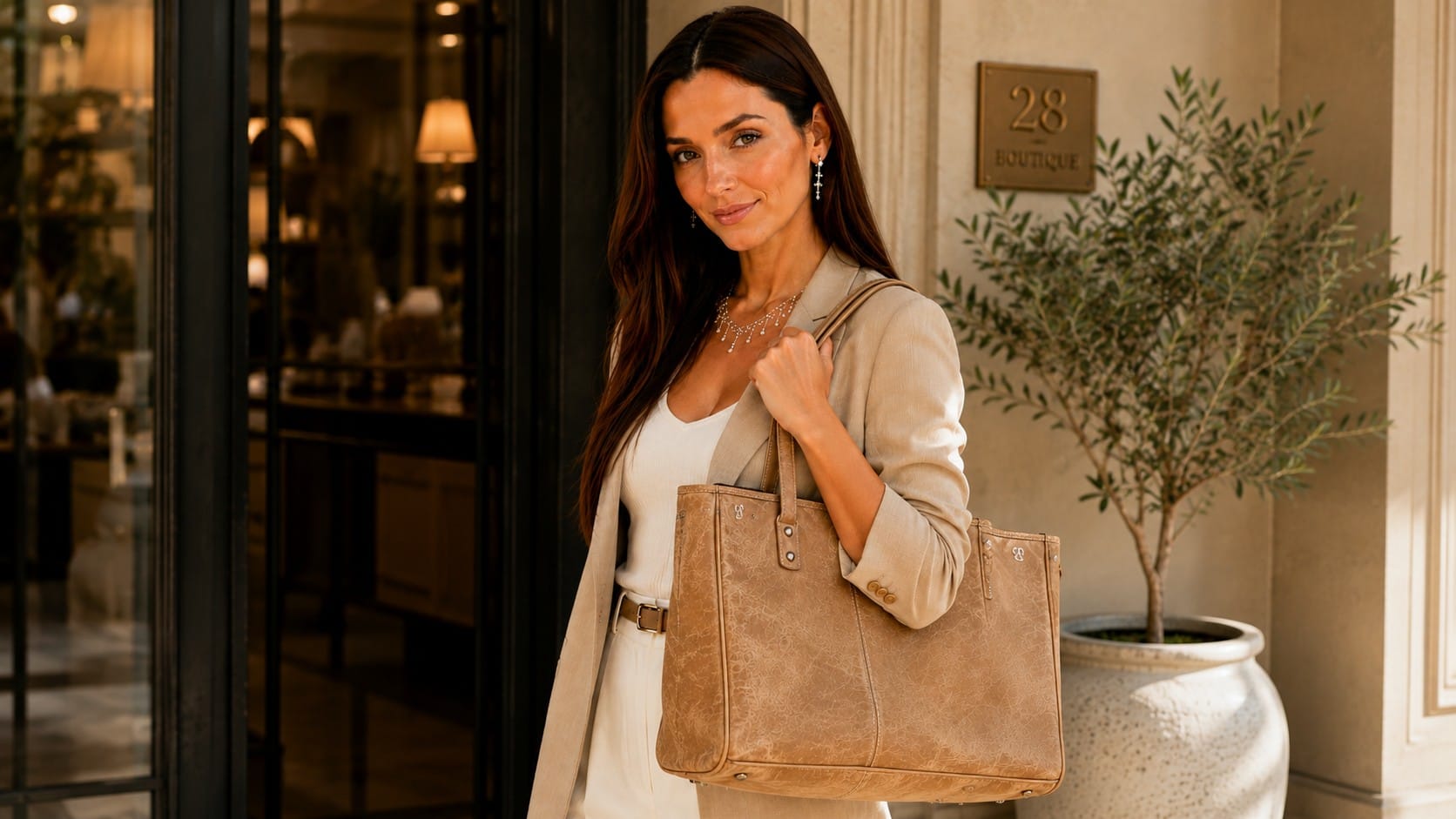
Frye Melissa Tote — Beige → — our affiliate link; we earn a small commission at no cost to you.
⭐ 4.4 · 696 ratings · $398 · Full-grain washed leather · Est. 1863
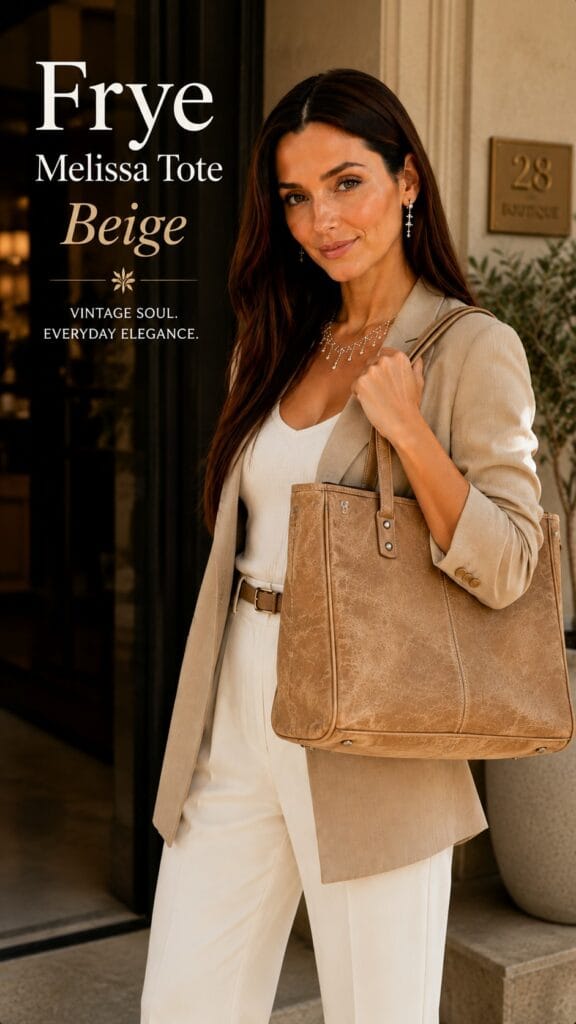
✨ Key Features
- 🏛️ Frye — founded 1863 — America’s oldest continuously operating shoe and leather company. Not a marketing story; a fact.
- 🐂 Full-grain washed leather — the top layer of the hide, soft-washed for a lived-in “vintage soul” character from day one
- 👜 A proper structured tote — holds its shape, stands up on its own, swallows a day’s worth of life
- 🔩 Antiqued hardware & the Frye logo medallion — quiet, heritage, unbranded to anyone who isn’t looking
- 🤎 A warm, versatile beige — the neutral that works with everything and only improves with age
- ✨ Built to be handed down — this is a buy-once, keep-for-decades bag
Check the current price on Amazon →
The quick verdict: There are two ways to buy an expensive handbag. You can buy a logo — a bag whose value is mostly the letters printed on it — or you can buy leather and history. The Frye Melissa is the second kind: full-grain washed leather from a house that’s been working hide since 1863, with no loud branding and nothing to prove. It costs $398 and it will look better in ten years than the day it arrives. This is what heritage looks like when it isn’t shouting. 🤍
Let me tell you why I’d choose this over almost any designer tote at twice the price.
Frye is the real thing, and the date proves it
In 1863 — while the American Civil War was still being fought — John A. Frye, a well-off shoemaker, opened his workshop in Massachusetts. 🤍
That makes Frye the oldest continuously operating shoe and leather company in the United States. Not “inspired by heritage.” Not “founded on the traditions of.” The oldest, still running, since 1863.
Frye boots were worn by soldiers on both sides of the Civil War. By cavalry officers. Reportedly by soldiers in both World Wars. The company has outlived the entire lifespan of most of the designer houses whose bags cost twice as much — and it did it not by marketing, but by making leather goods so well that people kept coming back for a century and a half.
That is provenance you can actually stand on. When you carry a Frye, you’re carrying a hundred and sixty years of a house that has only ever done one thing: work leather, properly.
Why heritage beats a logo — and why I chose this
I’ll be direct, because it matters. The obvious “luxury” tote for a list like this would be a big designer name — the kind everyone recognises. I didn’t choose one, and here’s the honest reasoning:
When you pay $450 for a logo bag, a large share of your money is the logo — the marketing, the boutique rent, the recognition itself. The leather is often the smaller part of what you’re paying for.
When you pay $398 for a Frye, you’re paying for the leather and the making. The branding is a small antiqued medallion that most people won’t even notice. Nothing about this bag announces its price. It just is good — good hide, good construction, good weight in the hand — and the people who notice it notice the bag, not the label. 🤍
That is, to me, the more elegant thing by far. The quietest luxury in any room is almost always the one without a name written across it.
Full-grain washed leather — what “vintage soul” actually means
This is real full-grain leather — the top layer of the hide, grain intact, nothing sanded or corrected away. It’s the strongest, longest-lived leather there is, and the only kind that develops a genuine patina rather than simply wearing out.
Frye then washes it, which is the source of the “vintage soul” character. Washing softens the hide and gives it that lived-in, gently distressed, already-loved look from the very first day — the marbled, tonal, characterful surface you can see in the beige.
So this bag arrives looking like it already has a history, and then it goes on to earn a real one: darkening, softening, and burnishing with every year you carry it. It’s the antithesis of a shiny, coated, factory-perfect designer bag — and if you understand leather, it’s the far more desirable thing.
(It’s the same principle as a copper lantern that patinas or a matelassé woven rather than stitched: buy the thing where the beauty is real and structural, and it only improves.)
The honest part 🤍
⚠️ Washed and distressed leather has its own rules — know them before you buy.
It can transfer colour, and it’s sensitive to it too. A soft, washed, lightly finished leather in a pale beige is more vulnerable than a hard-coated bag: dark denim can rub indigo onto a light bag, and the bag itself can mark. Treat it with a leather protector before first use, and be a little mindful of what you wear against it early on. This is the trade-off for real, breathable, un-plasticised leather — and it’s worth it, but it’s real.
The distressing is intentional — don’t mistake character for damage. Because it’s washed leather, it arrives with tonal variation, natural marks, and a lived-in surface. That is the design, not a defect. If you want flawless, uniform, factory-perfect leather, this washed finish will read as “imperfect” to you, and you’ll be unhappy. If you love the idea of a bag with soul, this is exactly it. Know which person you are.
It’s real leather, so it has weight. A structured full-grain tote is not a featherweight nylon bag — it’s substantial before you put anything in it. That heft is quality, but if you need the lightest possible bag for a bad shoulder or a heavy daily load, factor it in.
696 reviews at 4.4 stars. For Lexi’s world, this is actually a healthy number — heritage leather houses don’t accumulate mass-market review counts, and 696 is a solid, real base for a $398 bag from a boutique-tier maker. It tells you the bag delivers, without being the tens of thousands you’d see on a $60 tote. The proof here is the 1863, the full-grain, and the century-and-a-half of Frye still standing — the reviews are a welcome confirmation, not the argument.
It’s beige, and beige lives carefully. A light bag shows wear and marks more visibly than a black or deep brown one. It’s the most beautiful and versatile choice, and it patinas most gorgeously — but if your life is hard on a bag, the brown or black Melissa will hide it better. The beige is for someone who’ll treat it with a little care and enjoy watching it age.
Who it’s for
The woman who has understood that the most confident thing she can carry is the one with no name written on it. Who would rather own one genuinely excellent leather bag that lasts twenty years than a rotation of logo bags that date?
It’s the everyday work-and-life tote for someone who values the object — the hide, the making, the century and a half behind it — over the recognition. It’s for the person building a home and a wardrobe of things that get better, not newer.
And it’s a genuine heirloom in the making. Full-grain leather, cared for, outlives its owner. This is a bag you buy once, carry for decades, and hand on. 🤍
The bottom line
Real full-grain washed leather, from the oldest leather house in America, in a beige that will only grow more beautiful — and not a loud logo anywhere on it.
Protect it before first use. Expect the washed character. Enjoy watching it age.
Carry the leather and the history. Let the people with something to prove carry the logo. 🤍
Check the current price on Amazon →
See the full Leather Goods edit →
See more of Lexi’s full fall edit →
As an Amazon Associate, SparkTrove Trends earns from qualifying purchases — at no additional cost to you.
I love you all — stay sparkly and stay luxurious. Luxe Lexi for SparkTrove Trends. 🤍



1 comment