Faux Linen Tablecloth Review — Buy Oatmeal, Not White
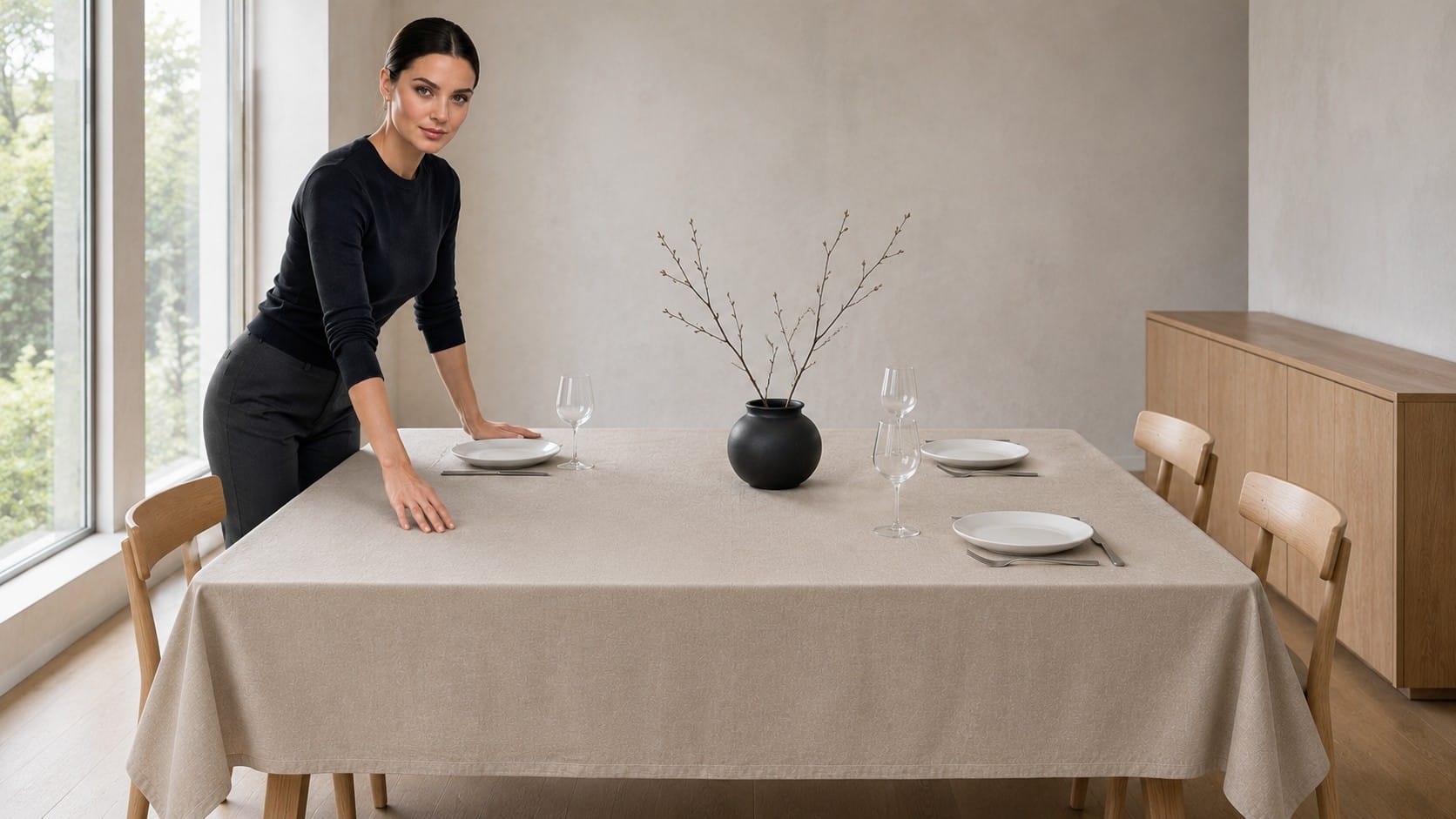
The single most common way a neutral table goes wrong is buying a white cloth to go under white plates. This review is mostly about that, and about why the colour you choose here matters more than almost anything else you put on the table.
✨ Key Features
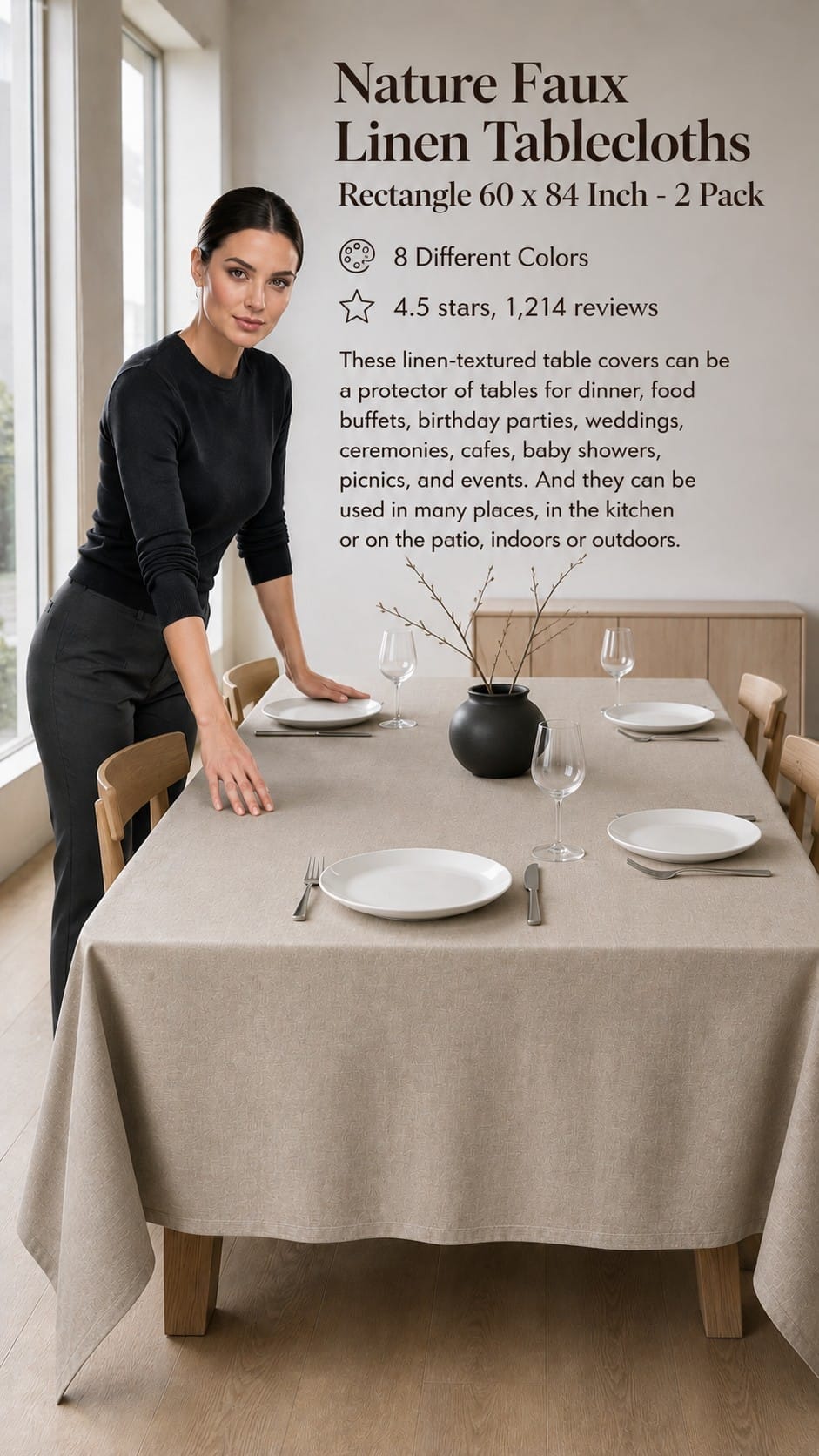
- Linen-textured weave — the visible surface texture is what stops a neutral table going flat
- 60 x 84 inches — measure your table before ordering; this is the one thing people get wrong
- 2 in a pack — one on the table, one clean, which is genuinely useful over a season
- 8 colours — oatmeal and greige are the ones I would actually buy
- 💰 $19.99 for two — ten dollars a cloth, which is not the price this look usually costs
- ⭐ 4.5 stars, 1,214 reviews — well-tested at this price
✨ The quick verdict
Two cloths for twenty dollars, in a texture that does the work colour usually does. Buy oatmeal or greige, measure first, and this is the cheapest correct decision on the whole table.
Why oatmeal and not white
White plates on a white cloth do not read as two objects. They read as one continuous surface with a faint outline where the plate is, and the eye has nothing to hold onto. That is the flatness people blame on the neutral palette when the palette was never the problem.
A warm neutral underneath solves it immediately. Oatmeal is a half-step from white — not enough to be a colour, enough to be a boundary. The plate now sits against something. The whole setting reads as layered rather than blank.
Candlelight compounds it. Warm light on a true white surface goes faintly grey-blue, which is the coldest a table can look. On oatmeal it goes gold. Same candles, entirely different room.
Texture is the other half
Restraint only reads as expensive when there is something to look at. Strip the colour out of a table and texture is all that is left doing the work — the weave of the cloth, the matte of the ceramic, the brushed metal, the unglazed base of a candle holder.
A linen-look weave has a visible irregular grain rather than a flat machine surface. That is what separates a considered neutral table from a plain one, and it is why I would not put a smooth polyester cloth under this look no matter what colour it was.
The honest part
- ⚠️ This is faux linen, not real linen. Worth being clear about. It has the texture and the drape at a tenth of the price, and it will not soften and improve across thirty years the way true linen does. That is exactly what you are trading for the price.
- ⚠️ Measure your table. 60 by 84 inches fits a standard six-seat rectangle with a reasonable drop. On a bigger table it will look short, and a short cloth is the one styling mistake that cannot be worked around.
- ⚠️ Light neutrals show everything. Wine, gravy, candle wax. Two in a pack helps, but treat spills during the evening rather than the next morning.
- ⚠️ It ships folded. Textured weaves hold creases. Iron on low or hang it the day before — fold lines across a plain cloth are very visible.
- ⚠️ Colour names are unreliable. Oatmeal, beige, greige and linen are used loosely across listings and screens vary. Order, look at it in your own light, and be willing to exchange.
None of it changes the recommendation at ten dollars a cloth.
Who it is for
This is for you if you want to try the tonal look before committing real money to it. Twenty dollars tells you whether you actually like a neutral table, and if you do, real linen is the upgrade later.
It is also the practical choice if you host often. Two cloths means one is always clean, which matters more in December than it does in June.
The bottom line
Buy oatmeal, not white. Measure before you order. Iron the fold lines out. Do that and a twenty dollar two-pack will make your white plates look considerably better than they did on a bare table. ✨
Building the whole thing? Here is my full quiet luxury Christmas table → — every piece, top to bottom.






1 comment